Great Zimbabwe
Capital of a Shona kingdom that dominated gold trade from the 11th to 15th centuries, Great Zimbabwe spans 7 km² of dry-stone enclosures south of Masvingo.
Great Zimbabwe lies 27 kilometers southeast of Masvingo, in the province of the same name, between the Limpopo and Save river basins. The site occupies a granite plateau dotted with kopjes—those distinctive inselbergs characteristic of southern Zimbabwe—at roughly 1,100 meters elevation. The landscape alternates between miombo woodland savanna, rocky outcrops, and agricultural lands where corn, sorghum, and peanuts are cultivated. A few kilometers to the north, Lake Mutirikwi, an artificial reservoir created by the dam of the same name in 1961, forms a 9,000-hectare expanse of water bordered by hills.
The country's name itself originates here. Great Zimbabwe designates the ruins of a Shona capital that dominated the interior from the 11th to 15th centuries, controlling the trade of gold, ivory, and copper toward the Swahili coast via the port of Sofala. Archaeologists estimate the city housed up to 18,000 inhabitants at its 14th-century peak. The site covers 7 km² and divides into three complexes: the Hill Complex perched on a kopje 80 meters above the plain, the Great Enclosure below, and the Valley of Ruins connecting them.
What strikes immediately is the construction technique. The walls are built in dry stone, without mortar, from blocks of granite extracted locally through heating and rapid cooling to fracture the rock. The Great Enclosure forms an elliptical ring 250 meters in circumference with walls reaching 11 meters high and 5 meters thick at the base. The conical tower rising within it, 11 meters tall and 5.5 meters wide at its base, remains the site's enigma: solid, without entrance, its exact role—whether religious, symbolic, or related to royal granaries—still sparks debate among historians.
The Hill Complex offers a different perspective. Access comes via a steep path following the ancient ceremonial route or through a more modern passage. At the summit, smaller enclosures nestle within natural granite blocks, blending human architecture with geology. It was here that the eight famous Great Zimbabwe birds, carved from soapstone and perched on columns, were discovered in 1889. These birds now appear on the national flag. Seven have been returned to Zimbabwe; the eighth remains in Berlin's ethnological museum.
The region is still inhabited by the Karanga, a Shona subgroup, whose villages dot the landscape around the site. They practice subsistence agriculture and raise livestock. At the cultural village adjoining the ruins, families demonstrate the preparation of sadza, a maize porridge that forms the basis of the diet, accompanied by relish of leafy greens or dried meat. The mbira, that sacred thumb piano of the Shona, is still played during bira ceremonies meant to communicate with ancestors.
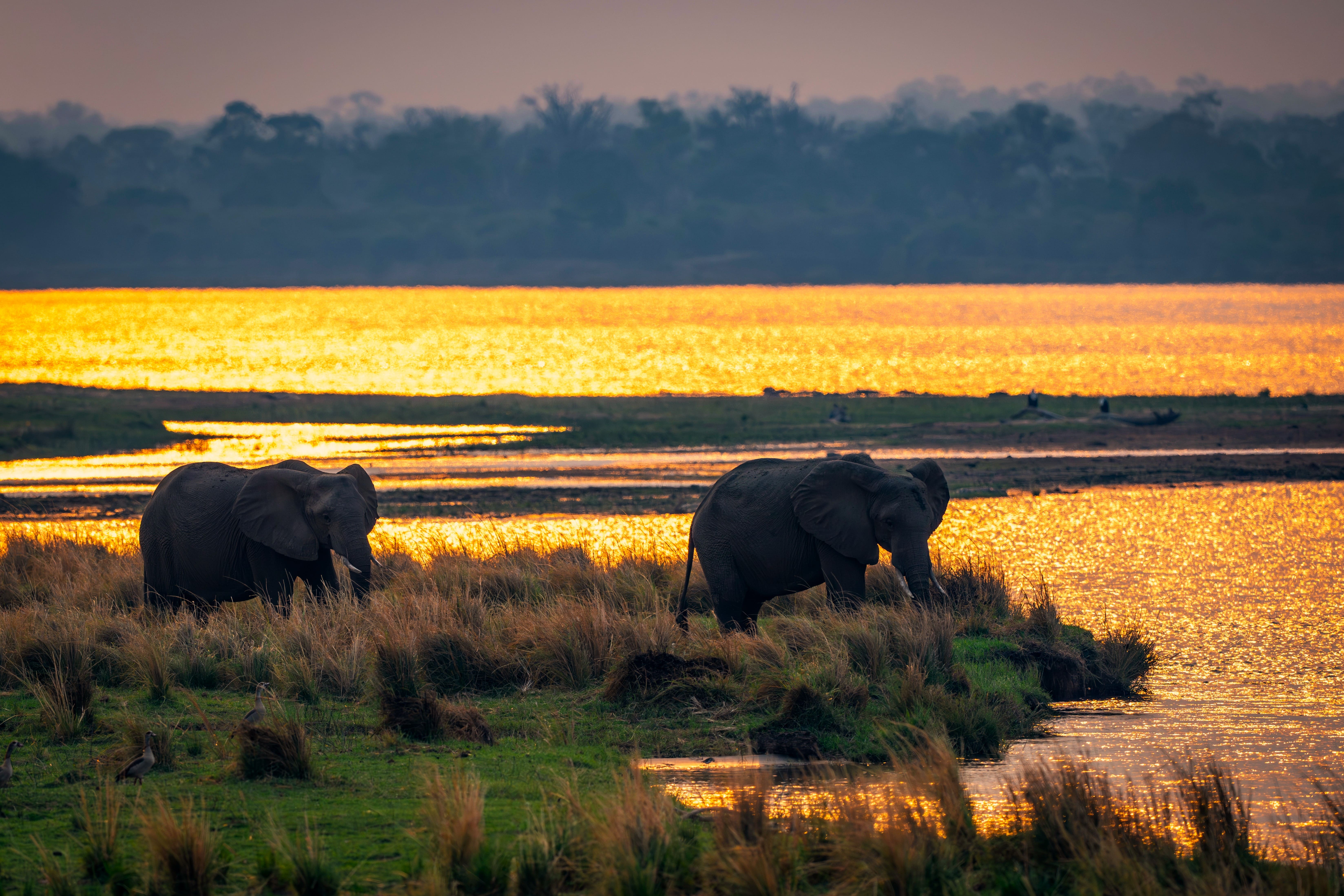
Beyond the archaeological site, the Lake Mutirikwi area merits a half-day. The recreational park bordering it is home to giraffes, zebras, Cape elands, and impalas reintroduced in the 1960s. A few lodges on the lakeshore allow overnight stays, pleasantly extending your visit to the ruins and avoiding a rushed day trip from Masvingo.
To Discover
The Great Enclosure and its conical tower. Walk along the Parallel Passage, a narrow 55-meter corridor hemmed between two 10-meter walls, which opens onto the conical tower at the center of the royal enclosure.
Ascending the Hill Complex. A 30-minute climb via the Ancient Path through granite blocks to the summit enclosures, offering views over the entire valley and Lake Mutirikwi in the distance.
Shona cultural village. Demonstrations of pottery, traditional blacksmithing, and sadza preparation in a reconstructed kraal, hosted by Karanga families from the area.
Light safari at Lake Mutirikwi. A 2 to 3-hour game drive in the neighboring recreational park to observe giraffes and zebras, followed by sunset over the dam.
The soapstone birds at the site museum. Small museum at the site entrance displaying seven of the eight carved birds found on the Hill Complex, Zimbabwe's national emblems.
When to Visit
The best time to visit Great Zimbabwe spans May through September, during the austral dry season. Daytime temperatures range between 22 and 26°C, nights are cool at 8 to 12°C in June and July, and the low-angled morning and late-afternoon light beautifully highlights the texture of the granite. This is also when the Hill Complex paths are passable without slipping.
From November to March, the rainy season brings thunderstorms, especially late afternoon, with monthly totals exceeding 150 mm in January. Daytime temperatures climb to 28–32°C and humidity makes the Hill ascent more taxing. Vegetation is luxuriant and the Lake Mutirikwi surroundings take on a spectacular green hue. October is the hottest month, reaching 34°C, and remains dry: best avoided by heat-sensitive travelers.
Practical Tips
A full day suffices to explore the site with a local guide, which we consistently recommend: the architectural codes and symbolism of the enclosures remain opaque without interpretation. Plan 3 to 4 hours of walking, with sturdy shoes for the ascent. Access is by road from Masvingo, 30 minutes away, which itself connects to Harare (300 km, 4 hours' drive) and Bulawayo (280 km, 4 hours). The relevant airports are Harare or Bulawayo; Masvingo's small airstrip lacks regular service.
Great Zimbabwe fits naturally as a stage between Harare and the south, or between Bulawayo and the east. We often pair it with Matobo and Bulawayo, a half-day's drive away, to extend the archaeological and historical dimension with San rock paintings in the Matobo Hills. Another possibility leads toward the Eastern Highlands via Birchenough Bridge. The region suits history and architecture enthusiasts, families with children from age eight onward, and those seeking a leisurely pace before or after safaris at Hwange or Mana Pools. Local comfort is adequate without being luxurious: lakeside lodges at Mutirikwi or a hotel in Masvingo; plan for one night on site.