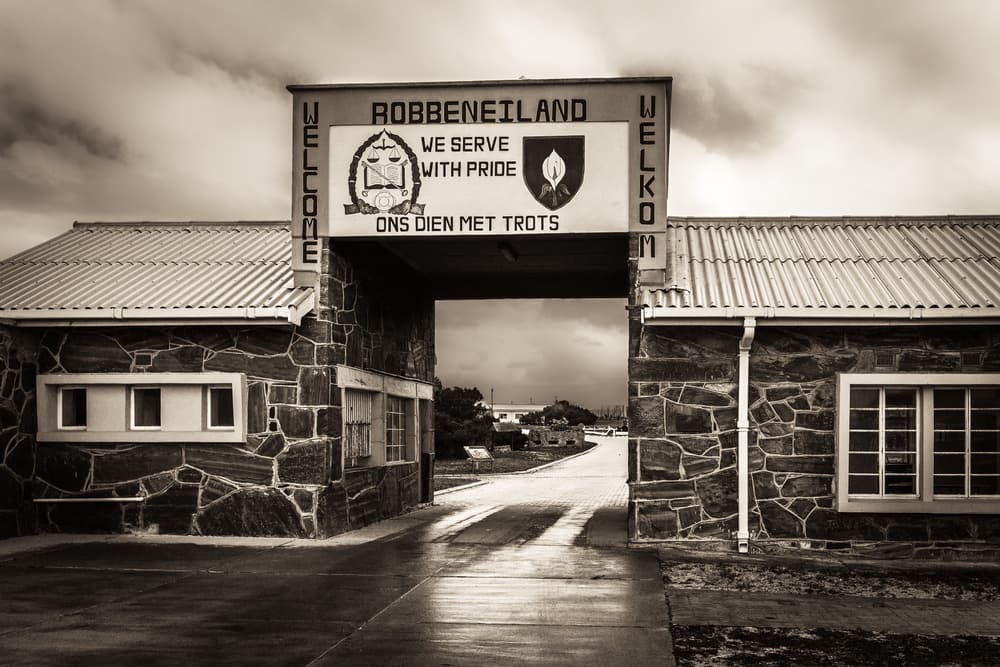
Robben Island
Robben Island
Prison island where Nelson Mandela spent 18 years, UNESCO-listed and accessible by ferry from Cape Town's V&A Waterfront. Guided tour led by a former inmate.
Robben Island is an island in Table Bay located approximately 7 km from the nearest coast and 11 km off Cape Town. Inscribed as a UNESCO World Heritage Site since 1999, it is globally known for housing the prison where Nelson Mandela spent 18 of his 27 years of imprisonment before becoming South Africa's first democratic president.
Why visit Robben Island
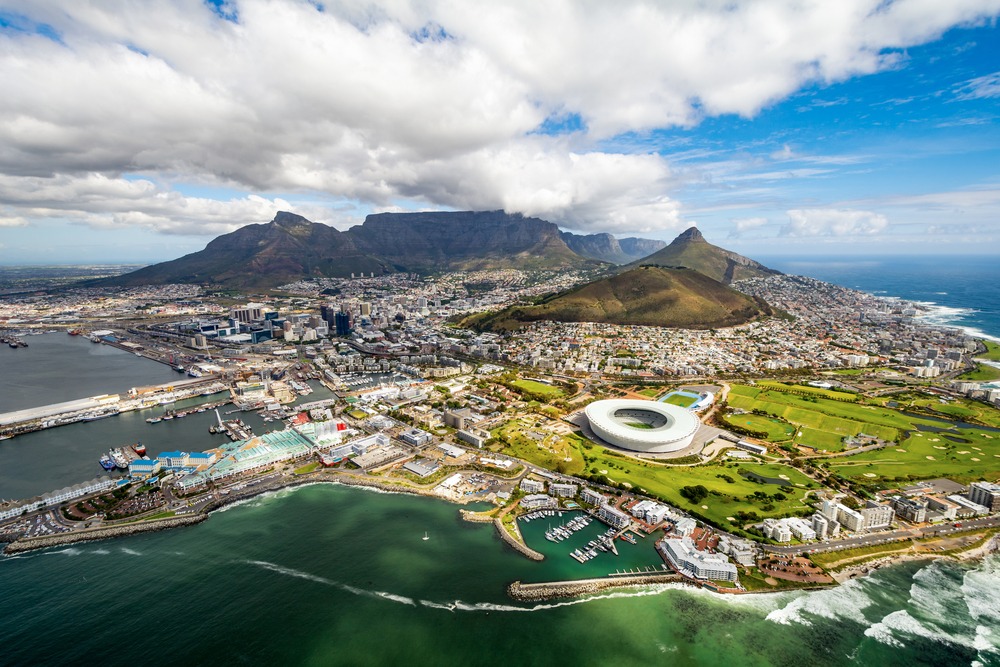
Nicknamed "the island of seals" due to the colonies that once populated its shores, Robben Island concentrates multiple layers of South African history in a single location accessible from central Cape Town. The visit combines three dimensions: a memorial site linked to the struggle against apartheid, heritage buildings converted into a museum, and a maritime crossing offering views of Table Mountain, Lion's Head, and Cape Town's urban skyline.
The primary appeal lies in its human dimension: prison tours are led by a former political prisoner, giving the visit a rare testimonial power among memorial sites.
History of the island
Robben Island experienced several lives before becoming a memorial site. From the 17th century onwards, its isolated position made it a place of exile used by Dutch and later British colonial authorities to remove political prisoners, opponents, and marginalised individuals from the continent.
- 17th-19th centuries: place of exile for indigenous chiefs and political prisoners under colonial administration.
- 19th century: establishment of a whaling station exploiting the waters of Table Bay.
- 1846-1931: the island is transformed into a leper colony, where the mentally ill and the destitute were also interned.
- Second World War: military use, with installation of coastal batteries.
- 1961-1996: high-security prison under the apartheid regime, intended primarily for Black political opponents. It was during this period that Madiba was incarcerated there, from 1964 to 1982.
- 1997: opening of the Robben Island Museum, followed in 1999 by UNESCO inscription.
What to see on site
The visit follows a set route of approximately 3 hours 30 minutes including the crossing. On the island, two main attractions follow in succession: a commentary bus tour around the island, then a walking tour of the maximum-security prison.
- Nelson Mandela's cell: a room of approximately 2 m² in Block B, preserved as it was with a thin bed and a sanitary bucket. Central point of the visit.
- The lime quarry: this is where Mandela and other inmates worked for years. The reflection of sunlight on the white rock permanently damaged his eyesight.
- Block B: section of high-security political prisoners, with corridors and cells open to the public.
- The exercise yard: where Mandela clandestinely wrote portions of his autobiography Long Walk to Freedom.
- The island village: former wardens' houses, school, church, and leper cemetery, traversed by bus.
- The leper colony church and 19th-century medical remnants.
- Coastal fauna: seals, African penguins, and seabirds observable near the arrival port.
Practical information
The site is managed by the Robben Island Museum and visits can only be made with an official ticket that includes ferry and guided tour. Advance booking is strongly recommended, particularly during high season (December–February), as places often sell out several days in advance.
- Total duration: allow approximately 3 hours 30 minutes to 4 hours, including crossings.
- Booking: online via the museum's official website or directly at the V&A Waterfront ticket office.
- Price: combined ticket for ferry and tour, high price level for Cape Town but consistent with a UNESCO site.
- Cancellations: departures are regularly cancelled in case of rough seas or strong winds. Plan a flexible time slot early in your stay to allow for rescheduling.
- What to bring: windbreaker, water, closed-toe shoes, sun protection. Few covered areas on the island.
How to get there
All ferries to Robben Island depart from the Nelson Mandela Gateway, located on Cape Town's V&A Waterfront, next to the Clock Tower. The area is easily accessible by taxi, ride-hailing service, or via the MyCiTi shuttle from downtown. Allow 30 minutes for the crossing in each direction, sometimes longer if swell slows the boat. Pre-registration at the Gateway is necessary before boarding, which means arriving at least 30 minutes early.
When to go
Robben Island can be visited year-round, but sea conditions largely dictate the experience. The southern summer (December to March) offers the warmest days and best views of Table Mountain, but crowds are heavy and the south-easterly wind can disrupt crossings. Autumn (April–May) and spring (September–November) often provide the best balance between stable weather, calmer seas, and moderate crowds. Winter (June–August) remains possible but cancellations due to storms are more frequent.
What to see nearby
Robben Island fits naturally into a Cape Town stay built around several complementary sites.
- Table Mountain: the city's iconic summit, accessible by cable car, offering a sweeping view over the bay and the island itself.
- Cape Point: spectacular point at Cape Peninsula National Park, approximately 1 hour 15 minutes' drive away.
- Cape of Good Hope: mythical promontory of explorers, in the same park as Cape Point.
Frequently asked questions
Allow approximately 3 hours 30 minutes to 4 hours in total, including two 30-minute ferry crossings, the bus tour around the island, and the guided walking tour of the prison.
Yes, strongly recommended. Tickets, which combine ferry and guided tour, sell out quickly during high season (December–February) and can be fully booked several days in advance. Booking is done online via the Robben Island Museum website.
The prison section has historically been guided by former political inmates. With time and aging of that generation, some guides are now close relatives of prisoners or trained historians, but the testimonial dimension remains central.
Ferries are regularly cancelled in case of rough seas or strong winds. The museum then offers rescheduling to another time slot or a refund. It's best to plan the visit early in your stay so you can reschedule if needed.
All departures are from the Nelson Mandela Gateway, on Cape Town's V&A Waterfront, next to the Clock Tower.
The site is open to all, but the content (apartheid, prison conditions) is more suited to children aged 10–12 and above, capable of understanding the historical context. The crossing can be challenging in rough seas.
Planning your trip
Robben Island fits into a larger circuit combining Cape Town, Cape Peninsula, the vineyards of Stellenbosch, and wildlife parks to the east. To build a tailor-made itinerary incorporating this UNESCO site, consult our South Africa travel suggestions.
Interested in this visit?
We can include it in your personalised itinerary.