Cape Town
Cape Town
A port metropolis between the Atlantic and Table Mountain, Cape Town blends the legacy of apartheid, century-old vineyards, and marine wildlife within reach of the city center.
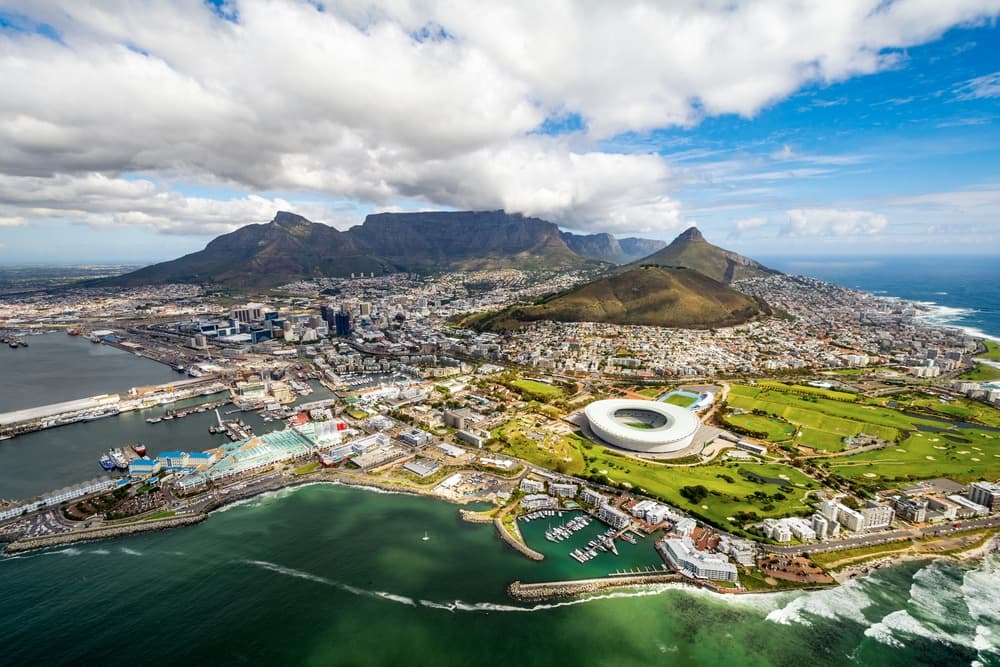
Cape Town, or the city of the Cape, is located at the southern tip of the African continent. This city has much to offer visitors seeking a change of scenery. It boasts, among other things, lush nature, compelling culture, and exceptional cuisine featuring world-class wines. The locality is blessed with white sand beaches that enchant vacationers despite waters notorious for their turbulence. Numerous activities are available for families and friends alike.
A Brief History of Cape Town
Cape Town was founded in 1652 as South Africa's mother city. Situated on Table Bay, just at the foot of Table Mountain, its name derives from the Cape of Good Hope located further south. In the mid-17th century, the first settlers arrived at the Cape of Good Hope, including the Dutch, Scandinavians, Germans, and other non-British Europeans. It was not until two centuries later that the British took control of the territory. In 1795, Great Britain captured Cape Town, which was returned to the Dutch in 1803.
Around 1806, following the Battle of Blaauwberg, the city was occupied once again by the British army. The Anglo-Dutch Treaty of 1814 marked its definitive cession to the United Kingdom. It then became the capital of the Cape Colony. In 1910, the Union of Afrique du Sud was established to unite the Cape Colony with the British colony of Natal and the two defeated Boer Republics. The city became the legislative capital and subsequently capital of the Republic of Afrique du Sud. In the early 20th century, the National Party rose to power on a platform of racial segregation. Cape Town's multiracial franchise was abolished and the Group Areas Act was established. All zones were classified by race. Toward the end of the 20th century, Cape Town represented a significant city for the anti-apartheid movement. Mandela's first public address since his release took place from the balcony of Cape Town's city hall on February 11, 1990.
Essential Attractions in Cape Town
Cape Town unveils an exceptional natural setting defined by mountains and ocean. This highly pleasant city also offers a festive atmosphere while preserving its old-world charm, particularly in the historic Cape Town area. When visiting, certain attractions deserve priority. To begin your adventure, it is recommended to take the famous red "Hop on Hop off" bus, which allows you to explore the most remarkable tourist sites of Cape Town.
Cape Town's Beaches
Two splendid beaches are well worth a visit during a stay in Cape Town. The red bus can stop at Clifton Beach, which is close to the city center. It promises idyllic adventures with its expanse of white sand and small coves offering various water activities. You can continue your journey to the celebrated and magnificent Camps Bay Beach, facing the 12 mountains known as the "12 Apostles". Several bars and restaurants are available on-site for a pleasant time. If you follow along the coast, you will encounter Shark Spotters who monitor the area with binoculars to alert surfers when sharks approach.
Table Mountain
Table Mountain is the most iconic viewpoint in Cape Town. To reach it, you can simply take the rotating cable car to an altitude of 1,086 meters in just a few minutes. Should your visit coincide with severe wind conditions, the cable car stops operating, and you will need to undertake a short hike to reach the summit.
Waterfront and Robben Island
The Waterfront district is a must-visit in Cape Town. This mini-city is home to the harbor, offering charming shops in every color imaginable. You will have the opportunity to visit one of the bars and restaurants at the harbor before embarking on a beautiful cruise to discover Robben Island. This destination allows you to see Nelson Mandela's prison along with the limestone quarry, his former workplace.
Climate
Cape Town enjoys a warm Mediterranean climate. Winters are mild and moderately humid, while summers are dry and warm. Annual precipitation averages 515 mm, with higher levels in the southern suburbs at the foot of the mountains.
Want to discover this destination?
Our local advisors design your tailor-made trip.