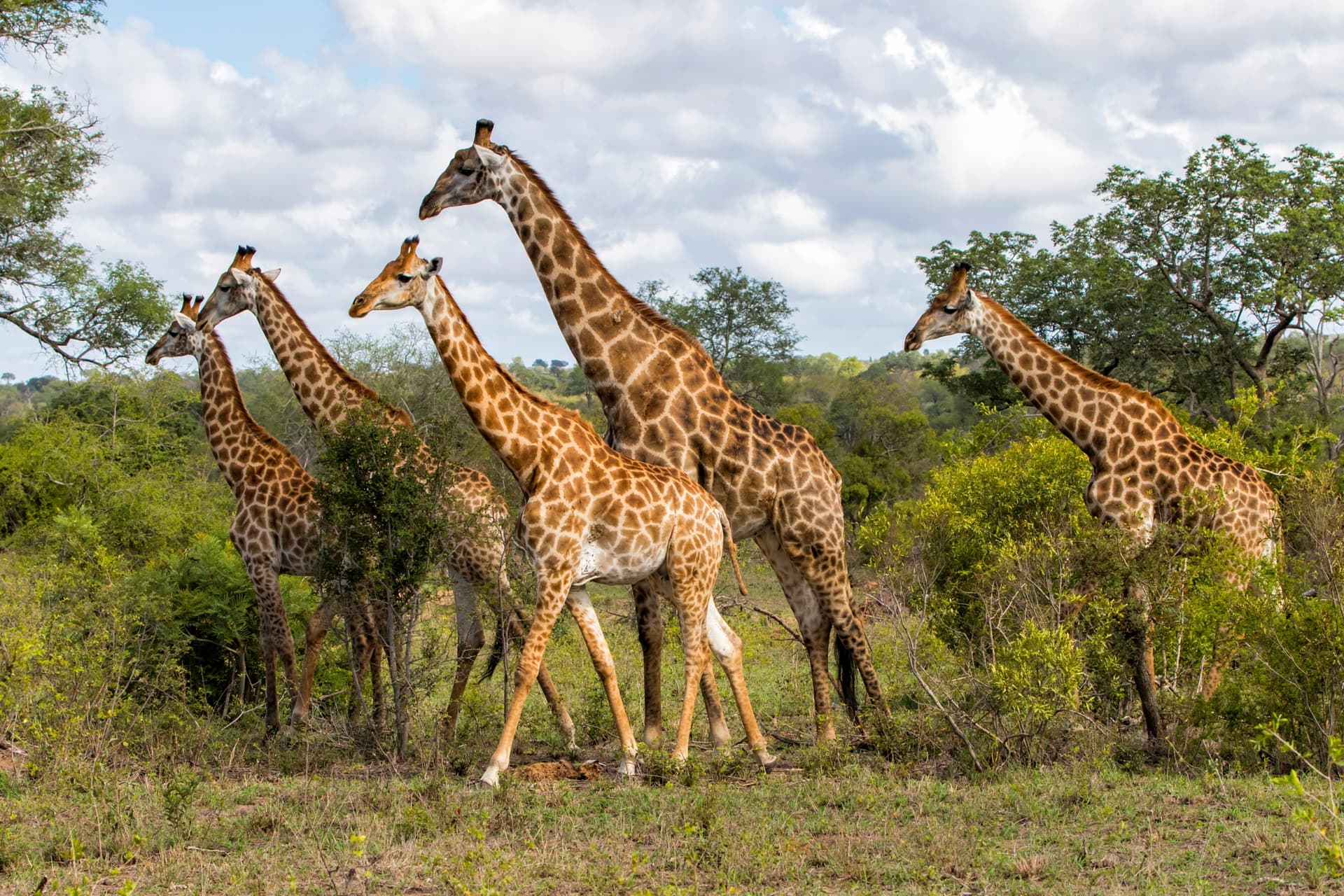
Sabi Sand Game Reserve
Sabi Sand Game Reserve
Private reserve in Mpumalanga bordering the Kruger, Sabi Sand is renowned for observing the Big Five and especially the leopard.
Located in Mpumalanga province, on the western border of Kruger National Park, Sabi Sand Game Reserve ranks among the most renowned private reserves in southern Africa. Crossed by the Sabie and Sand rivers that give it its name, it offers one of the finest viewing grounds for the Big Five, with a particular reputation for the leopard.
Why visit Sabi Sand
The reserve presents three major assets for travelers interested in safari:
- An open border with the Kruger since 1993, which allows wildlife to move freely between the two protected areas.
- High animal density, with the presence of five great mammals: lion, leopard, elephant, rhinoceros and buffalo.
- A private reserve model that allows off-road excursions and night safaris, unlike the neighboring national park.
Sabi Sand is regularly cited among the world's best destinations for observing the leopard at close range, with these felines accustomed to the presence of safari vehicles.
History of the reserve
The Sabi Sand territory was long occupied by the Tsonga people before colonial rule arrived. In the early 1900s, Tsonga communities were dispossessed as part of the expansion of what would become Kruger National Park, created to protect the region's wildlife.
In 1961, a veterinary fence was erected between Sabi Sand and the Kruger, motivated by fears of disease transmission to livestock and the desire to limit poaching. This barrier cut ancestral migration routes of large herbivores.
It wasn't until 1993 that the fences were removed. Animals then regained the freedom to move between the two spaces, which today form a continuous ecosystem of more than two million hectares with the Greater Kruger.
What to see and do
The Big Five
Sabi Sand is home to the five emblematic species of South African safari:
- The leopard: the reserve's specialty. Local guides know the territories of several individuals that have been monitored for years.
- The lion: observable in family groups, often near water sources.
- The elephant: present in herds, particularly visible in the dry season around rivers.
- The rhinoceros: black and white, under enhanced anti-poaching surveillance.
- The buffalo: in large mobile herds across the reserve.
Rivers and water sources
The Sabie and Sand rivers structure the reserve and concentrate animal life. In the dry season, permanent water sources become prime viewing spots where predators and herbivores converge.
The lodges
Accommodation at Sabi Sand is exclusively in private lodges, each managing its own concession:
- Londolozi, on the banks of the Sand, is one of the pioneers of ecotourism in South Africa.
- Singita Sabi Sand, owned by the Bailes family, groups Ebony Lodge, Boulders Lodge and Castleton Camp in the luxury segment.
- Mala Mala, one of the oldest concessions, covers a vast area on the Kruger border.
- Chitwa Chitwa offers six suites facing a major water source in the reserve.
- Umkumbe Safari Lodge and Elephant Plains provide more accessible options without fencing on the Kruger side.
When to visit
The reserve can be visited year-round, but conditions vary significantly by season.
- Dry season (May to September): sparse vegetation, animals concentrated around water sources, viewing facilitated. Cool nights, temperate days.
- Rainy season (November to March): sometimes heavy rainfall, temperatures reaching 40°C. Lush landscapes, births among many species, presence of migratory birds.
The months of April-May and September-October are good compromises between pleasant temperatures and good wildlife visibility.
Practical information
- Recommended duration: minimum three nights to enjoy multiple early morning and late afternoon outings.
- Budget: Sabi Sand positions itself in the mid-range to luxury segment. Lodge rates typically include accommodation, meals and two guided safaris per day.
- Clothing: natural-toned clothing (khaki, beige, brown) for observation outings. Fleece for mornings in open vehicles, sun protection and insect repellent.
- Health: malaria zone, antimalarial treatment recommended after medical advice.
How to get there
From Johannesburg
Several options are available to travelers from O.R. Tambo:
- Flight to a private airstrip in the reserve (Londolozi, Ulusaba, Arathusa) via regional airlines: quick journey, often included in lodge packages.
- Flight to Skukuza or Hoedspruit, followed by a road transfer of approximately one to two hours.
- Direct route: expect approximately five to six hours travel time from Johannesburg.
From Kruger National Park
The Newington and Shaw gates provide access to Sabi Sand from the Kruger. The journey between the two reserves takes about ten minutes.
What to see nearby
Sabi Sand fits easily into a broader South Africa itinerary:
- The neighboring Kruger National Park, to complement the safari experience with a national park approach.
- The Blyde River Canyon, one of the world's largest canyons, accessible from Hoedspruit.
- The Cape region: the Cape Peninsula, the Bo-Kaap neighborhood and Franschhoek Wine Valley to extend the trip with an urban and wine-tasting stop.
Frequently asked questions
Frequently asked questions
Sabi Sand is a private reserve made up of concessions owned by lodges, whereas the Kruger is a state-managed national park. With no fence between the two since 1993, wildlife moves freely. Sabi Sand allows off-road excursions and night safaris, which the Kruger prohibits.
Three nights is a good minimum to multiply outings and increase chances of observation, particularly of the leopard. Four to five nights allow for more complete immersion.
No. Sabi Sand is a private reserve accessible only to lodge guests staying there. For a day visit, you must fall back on the neighboring Kruger National Park.
The leopard can be observed year-round at Sabi Sand. The dry season (May to September) however facilitates spotting due to less dense vegetation.
Sabi Sand is located in a malaria risk zone. Preventive treatment is generally recommended, to be confirmed with a health professional before departure.
Preparing your safari
Sabi Sand often forms the centerpiece of a South Africa circuit, combining luxury safari and cultural stops in the Cape region. To build a tailor-made itinerary including Sabi Sand, the Kruger or the wine route, consult our suggestions for trips to South Africa.
Interested in this visit?
We can include it in your personalised itinerary.